Free Affiliate Sub-ID Generator
Paste any Impact, Rakuten, eBay Partner Network, Awin, CJ, or ShareASale tracking link, and get it back with the sub-ID parameter that network actually reads, exact name, exact casing. Your links never leave the browser.
Everything runs in your browser. Your links never reach our servers, and history stays in this browser only.
The network counts commissions. Who counts your clicks?
Wrap the tagged link in a Flyn short link and you get a click count on your side of the fence, before the network dashboard updates. The redirect goes to the exact URL you paste, sub-ID and every other parameter included.
How to Add a Sub-ID to an Affiliate Link in 3 Steps
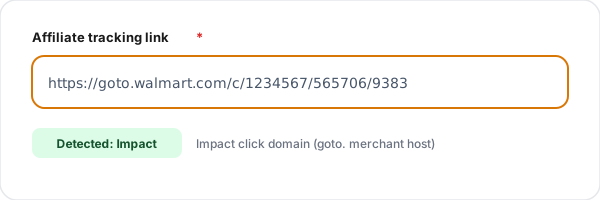
Paste the affiliate tracking link
Paste the link the network gave you. The tool reads the host and detects the network: sjv.io or pxf.io means Impact, click.linksynergy.com means Rakuten, awin1.com means Awin, and so on. If the host is not recognised, pick the network from the dropdown.
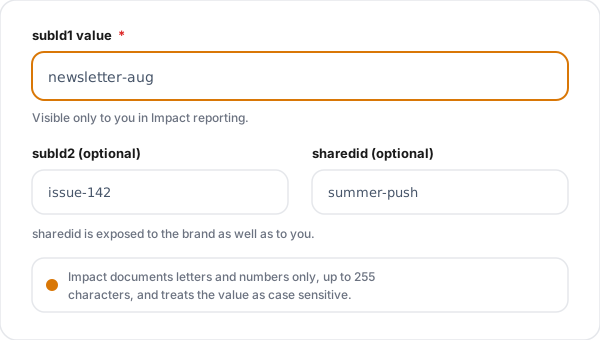
Type your sub-ID value
Enter the label you want to see in your reports, such as newsletter-aug or blog-review. Where the network supports more slots, extra fields appear: subId2, subId3, and sharedid on Impact, clickref2 on Awin. The tool warns you when a value breaks a documented character or length rule.
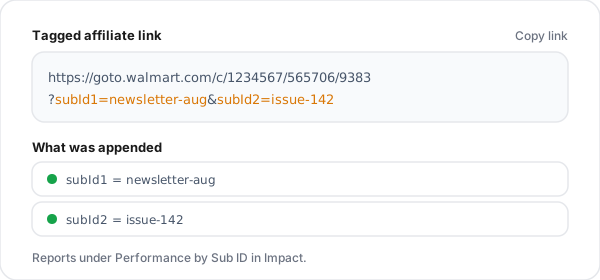
Copy the tagged link
The parameter is appended with the exact documented name and casing. If the link already carried that parameter, its value is replaced in place and the tool says so. Everything else on the link stays byte for byte as you pasted it.
What Is an Affiliate Sub-ID?
An affiliate sub-ID is your own tracking value, appended to a network tracking link, that the network stores with the click and hands back to you in reporting. The network already knows the click is yours, that is what the link itself encodes. What it cannot know is which of your placements produced the click: the newsletter, the review post, the sidebar banner. The sub-ID carries that answer.
The frustrating part is that every network spells the parameter differently. Impact reads subId1, Rakuten Advertising reads u1, eBay Partner Network reads customid, Awin reads clickref, CJ reads sid, and ShareASale reads afftrack. Use the wrong name and nothing errors, the value is simply ignored and your reporting stays blank.
Sub-IDs are the outbound half of conversion attribution. The inbound half is the postback, where the network substitutes your value back into a URL it calls when a sale is approved. If you are building that loop, the postback URL tracking guide walks the whole circuit, and Flyn conversion tracking gives your short links the same server to server postback pattern.
The Sub-ID Parameter, Network by Network
Every name, limit, and behaviour note below comes from the network's own documentation. This is the same classification our affiliate link checker uses when it decides whether a parameter drop matters.
| Network | Detected from | Parameter | Extra slots | Documented limit | Where it reports |
|---|---|---|---|---|---|
| Impact | sjv.io, pxf.io, ojrq.net, 7eer.net, evyy.net, prf.hn, goto.walmart.com, goto.target.com | subId1 | subId2, subId3, sharedid | 255 chars, letters and numbers, case sensitive | Performance by Sub ID and Shared ID. Sub IDs are private to you, sharedid is exposed to the brand. |
| Rakuten Advertising | click.linksynergy.com | u1 | none | 72 chars, alphanumeric | Comes back as u1 in Rakuten reporting. |
| eBay Partner Network | ebay.* URLs carrying campid | customid | none | 256 chars, alphanumeric | Performance by Custom ID report, plus a column on the Transaction Detail report. |
| Awin | awin1.com | clickref | clickref2 (slots 2 to 6 stay inside Awin) | 50 chars, letters and numbers | Awin reporting. Only clickref reaches the advertiser landing page, clickref2 to clickref6 do not. |
| CJ Affiliate | anrdoezrs.net, dpbolvw.net, jdoqocy.com, kqzyfj.com, tkqlhce.com | sid | none | No public limit we could verify | CJ reporting. The advertiser side receives the CJEVENT click id CJ appends at redirect time. |
| ShareASale | shareasale.com (r.cfm banner and text links, m-pr.cfm product links) | afftrack | none | 255 chars, alphanumeric, no spaces | ShareASale reports, and the postback macro !!afftrack!! returns it. |
Sub-ID vs UTM Parameters
Both are labels on a URL, which is why they get confused. The difference is who reads them. If your link points at a page you own, you want UTMs from the UTM builder instead.
| Aspect | Sub-ID (this tool) | UTM parameter |
|---|---|---|
| Who reads it | The affiliate network | Your own analytics tool |
| Where it reports | The network dashboard, next to clicks and commissions | Your analytics property, next to sessions and conversions |
| Belongs on | The network tracking link (the click URL) | Links pointing at pages you own |
| If you skip it | Commissions still pay, but you cannot tell which placement earned them | Traffic still arrives, but shows as direct or referral |
| Typical value | newsletter-aug, sidebar-banner, review-post | utm_source=newsletter&utm_campaign=aug |
Sub-ID Best Practices
Six habits that keep sub-ID reporting useful instead of noisy.
Name the placement, not the person
Encode the page, slot, or campaign, never an email address or anything that identifies an individual visitor. A sub-ID is stored in a third party dashboard you do not control.
Keep one naming scheme across networks
The parameter changes per network but your values should not. If YouTube description links are yt-desc on Impact, make them yt-desc on ShareASale too, or cross-network comparisons turn into archaeology.
Stick to lowercase letters, numbers, and hyphens sparingly
Impact, Awin, eBay, and ShareASale all document letters and numbers. Impact additionally treats the value as case sensitive, so one stray capital splits your reporting into two rows.
Put the value that matters in the first slot
Awin transmits only clickref to the advertiser landing page, slots 2 to 6 stay inside Awin. If a downstream system needs to read your id, it has to travel in the first reference.
Test with a sentinel before real money depends on it
Set the sub-ID to a throwaway value like test123, click your own link, and confirm the value appears in the network click report. That one check proves the outbound half of the loop.
Do not touch the payout parameters
The campid, publisher id, and merchant id already on the link are what get you paid. This tool only appends the reporting slot and leaves every existing byte of the link alone.
Why Use Flyn's Affiliate Sub-ID Generator?
Documented names only
Every parameter name, casing rule, and length limit comes from the network's own documentation, not from a copied forum snippet. The tool warns you when a value breaks a documented rule.
100% client side
Your affiliate links carry your account ids. They never reach our servers, nothing is logged, and history stays in your browser.
Nothing else is touched
The tool appends or replaces one reporting parameter and leaves every other byte of the link exactly as the network built it, including encoded deep links.
Part of a full toolkit
Tag the link here, verify it survives every redirect with the affiliate link checker, then test the return path with the postback URL tester.
Frequently Asked Questions
What is an affiliate sub-ID?
A sub-ID is a short value you append to an affiliate tracking link so the click and any resulting commission show up in the network dashboard under a label you chose. Every major network reserves a parameter for it, but each one spells it differently: Impact uses subId1, Rakuten Advertising uses u1, eBay Partner Network uses customid, Awin uses clickref, CJ uses sid, and ShareASale uses afftrack. The value itself is yours to invent, most affiliates encode the placement, page, or campaign that hosted the link.
Does adding a sub-ID change my commission?
No. The identifiers that get you paid are already on the tracking link, such as the campid on an eBay Partner Network link or your publisher id on an Awin click URL. The sub-ID rides along purely as a reporting label. It tells you which placement drove the click and the sale, it does not change whether the sale is credited to you.
Why does the exact parameter name matter so much?
Because a network only reads the parameter it documents, and there is no error message when you use the wrong one. Append utm_campaign to a ShareASale link and ShareASale records nothing, the reporting slot it reads is afftrack. Same story on every network: subId1 on Impact, u1 on Rakuten, customid on eBay, clickref on Awin, sid on CJ. This tool exists so you never have to remember which spelling belongs to which network.
Does casing matter in the value?
On Impact it does. Impact treats the sub-ID value as case sensitive, and its postback macro {SubId1} is documented as case sensitive too, so summer-Sale and summer-sale are two different rows in your reporting. The safest habit across every network is to pick one casing convention, usually all lowercase, and never deviate from it.
What is the difference between subId1 and sharedid on Impact?
Visibility. Impact documents the Sub ID parameters (subId1, subId2, subId3) as values only you can see in your reports. The sharedid parameter is a custom partner tracking value that is exposed to the brand and included in reports both sides can see. Use sharedid when the advertiser needs your placement split, and keep everything you would rather not share in the subIds.
Why do Awin clickref2 to clickref6 never reach the advertiser page?
Awin documents clickref2 to clickref6 (and pref2 to pref6) as non-public parameters that cannot be transmitted to the advertiser landing page. They still appear in your own Awin reporting, so they work fine for private splits, but any setup that expects to read them on the merchant side is broken by design. Put the value you need downstream in clickref itself, the one reference that does reach the landing page.
What characters and lengths are allowed?
Impact documents letters and numbers only, up to 255 characters. Awin documents any combination of letters and numbers, up to 50 characters. eBay documents the Custom ID as an alphanumeric identifier of up to 256 characters. ShareASale documents an alphanumeric tracking string with no spaces or special characters, up to 255 characters. Rakuten documents the u1 value as up to 72 alphanumeric characters in its member ID documentation. CJ does not publish a hard limit on the public pages we could verify, so keep that value short and alphanumeric too. The tool warns you when a value falls outside a documented rule.
Where do I see the sub-ID values afterwards?
Inside each network dashboard, not in your own analytics. Impact reports them under Performance by Sub ID and Shared ID. eBay Partner Network has a Performance by Custom ID report plus a Custom ID column on the Transaction Detail report. Awin returns click references in its reporting, ShareASale shows afftrack in your reports, CJ shows the sid, and Rakuten returns u1. If you want the click in your own dashboard too, wrap the tagged link in a short link that counts clicks.
How is a sub-ID different from a UTM parameter?
They answer the same question in two different dashboards. UTM parameters are read by your own analytics on your own site. Sub-IDs are read by the affiliate network and reported next to clicks and commissions in its dashboard. On an affiliate link the visitor lands on the merchant site, not yours, so your analytics never sees the pageview and the sub-ID slot is the one that matters. For links pointing at your own pages, use our UTM builder instead.
How do sub-IDs pair with server postbacks?
The sub-ID makes the round trip. You send your value out with the click, and when the network approves a conversion it substitutes the value back into your postback URL through a macro, {SubId1} on Impact, !!afftrack!! on ShareASale. That loop is what ties a specific sale back to a specific placement. Sub-IDs are for your reporting inside the network dashboard, and they pair naturally with server postbacks, which is what Flyn Pro conversion tracking provides on the links you shorten.
Will my sub-ID survive a link shortener?
It should, because a shortener redirects to the exact destination URL you gave it, sub-ID included. The failures happen further down the chain, when an intermediate redirect rebuilds the URL and drops parameters. That is worth testing rather than assuming: paste the final tagged link into our affiliate link checker and it traces every redirect and tells you which parameters reached the destination.
What if my network is not auto-detected?
Detection only covers host patterns we can verify: Impact click domains such as sjv.io and pxf.io plus goto.walmart.com and goto.target.com, click.linksynergy.com for Rakuten, awin1.com, the CJ click domains (anrdoezrs.net, dpbolvw.net, jdoqocy.com, kqzyfj.com, tkqlhce.com), shareasale.com, and eBay URLs that already carry campid. Anything else shows as not recognised. Pick the network from the dropdown and the correct parameter is still appended.
Does this tool store or send my affiliate links?
No. The tagged link is built with client side JavaScript in your browser, nothing you paste reaches our servers, and there is no server log of your links or sub-IDs. Pressing Generate fires one product analytics event containing the tool name, the action, and the detected network name, nothing from your link or value is in it. Successful generations are saved to a history list in your browser localStorage, capped at the last twenty entries, which you can clear from the panel.
Related Tools
Tag the link here, then prove the tag survives and the postback fires.
Affiliate Link Checker
Trace the tagged link through every redirect and confirm your sub-ID and payout parameters reach the destination.
Postback URL Tester
The other half of the loop: resolve network macros, fire the postback, and read the exact response.
UTM Builder
For links that point at pages you own, where your analytics reads the labels instead of the network.
Link Cloaker
Turn the long tagged tracking link into a clean branded URL people actually click.
Tag the link, then close the loop
Sub-IDs tell the network dashboard which placement earned the sale. Flyn conversion tracking brings the same answer to your own links with server to server postbacks, next to free click counts and QR codes.
Tip: one lowercase naming scheme across every network keeps reports comparable.