Free Internal Link Checker
Audit internal link structure on any page, path depth, duplicate targets, nofollow audits, anchor diversity. Single-page SEO diagnostic in one click.
Track internal link clicks
Wrap key internal nav links in Flyn short links to see which CTAs and cross-links users actually click, turn internal linking from guesswork into data.
How to Audit Internal Links in 3 Steps
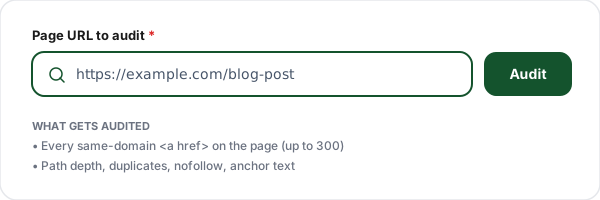
Enter any URL
Paste the URL you want to audit. The tool fetches the HTML server-side, parses every <a> tag, and filters to same-domain links, up to 300 internals per page.
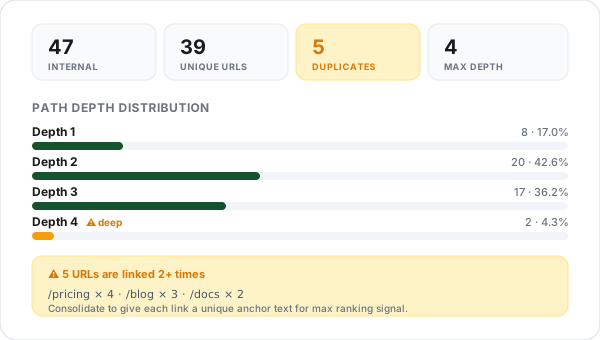
Review structure & depth
See every internal link with path depth (count of / in URL), duplicate target flags, nofollow warnings, and anchor text. Summary cards show total internals, unique URLs, avg/max depth, and nofollowed counts.
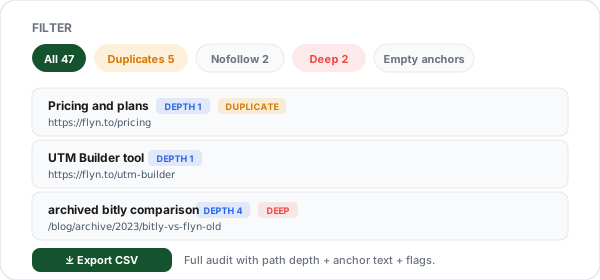
Filter and export
Click any depth bar in the distribution to filter. Toggle between all links, duplicates only, or nofollow only. Export the full audit as CSV for Google Sheets or SEO client reports.
What is Internal Linking?
Internal linking is the practice of linking from one page on your site to another on the same domain. Unlike external backlinks (which you mostly can't control), internal links are 100% under your control, making them the highest-ROI SEO investment most sites can make. A strong internal link structure does three things search engines care about: (1) distributes link equity from high-authority pages to newer ones, (2) signals which pages are most important via link count and anchor text, and (3) ensures every important page is reachable and crawlable.
The single most-cited internal linking rule is the three-click rule: every important page should be reachable within three clicks from the homepage. Google's crawlers prioritize shallow pages, pages deeper than 4 clicks get crawled less often, which means slower ranking updates and lower overall authority. This tool reports path depth (the count of slashes in the URL) as a proxy for click depth. It's not identical (a deep URL might still be linked from the homepage navigation) but it's a useful quick signal.
Orphan pages, pages with zero incoming internal links, are the single biggest internal linking problem on most sites. Orphans get discovered only through sitemaps or external links, rarely get crawled, and usually rank poorly. Finding orphans requires a full-site crawler like Screaming Frog or Sitebulb. This tool complements those: once you find a candidate page, paste it here to audit its outgoing internal links. Pages that link poorly to peers usually get poor inbound links too, the pattern is self-reinforcing.
Use this tool for four concrete audits: (1) internal link count, is this page contributing to site structure? (2) duplicate detection, are you wasting anchor text by linking the same URL 5 times? (3) nofollow sanity check, are you accidentally nofollowing editorial internals? (4) path depth audit, how deep is this page linking out? Pair with our Anchor Text Analyzer for anchor quality and Outbound Link Checker for external-link review to complete a full on-page link audit.
Internal Linking Best Practices
Every important page within 3 clicks of home
Google crawls shallower pages more often. If a product or conversion page sits 5+ clicks deep, it gets crawled less and ranks harder. Restructure nav or add category-level links to pull it up.
30-150 internal links per page
Below 10, you're not contributing much to site structure. Above 200, link equity dilutes too thin. Sweet spot: 50-100 mixing nav, footer, sidebar, and 3-8 contextual body links.
No nofollow on editorial internals
Nofollowed internal links waste link equity. The only valid nofollow internals are login/register, search result pages, and admin routes, never blog posts, pricing, or products.
Consolidate duplicate target links
If /pricing is linked 5 times on one page, only the first anchor counts for ranking signals. Keep one contextual link with the best anchor text; remove the rest.
Varied descriptive anchor text
Internal anchors can be more keyword-focused than external ones, but 10 different pages all linking to /pricing with the same exact anchor looks manipulative. Mix keyword, brand, and natural variations.
Link hubs to spokes to hubs
Category pages should link down to individual content. Individual content should link back up to the parent category and sideways to 2-3 peer articles. This "hub and spoke" pattern is the proven information-architecture shape for SEO.
Why Use Flyn's Internal Checker?
Path depth analysis
Every internal link gets a depth score. Distribution chart shows how deep the page links out, click-depth is a ranking factor.
Duplicate target detection
Flags every URL linked 2+ times with all the anchors used. Helps you consolidate redundant links that waste anchor opportunity.
Nofollow audit
Lists every internal link with rel="nofollow". Most should be dofollow, this catches accidentally nofollowed editorial internals.
CSV export
Full audit data for Google Sheets, SEO client reports, or manual QA. Up to 300 internal links per page with 7-column schema.
Frequently Asked Questions
What is an internal link?
An internal link is a hyperlink that points to another page on the same domain. Links from /blog/seo-guide to /blog/meta-tags are internal. Links to external sites like wikipedia.org are outbound. Internal links help search engines discover and understand your site structure, distribute link equity (PageRank) across pages, and guide users to related content. Every well-structured site has a thoughtful internal linking strategy.
Why does internal linking matter for SEO?
Internal linking does three critical jobs. First, it signals relevance; linking from a high-authority page to a newer one passes link equity and helps the target rank. Second, it establishes site hierarchy, Google uses internal links to understand which pages are most important. Third, it improves crawlability, pages with no inbound internal links (orphans) can take weeks to get indexed, while well-linked pages get crawled frequently. Strong internal linking is one of the highest-ROI SEO investments because it's entirely under your control.
What is "link depth" and why does it matter?
Link depth is the number of clicks it takes to reach a page from the homepage. Homepage is depth 0, top-level pages are depth 1, etc. Google's crawlers prioritize shallow pages, anything beyond 4 clicks deep gets crawled less often and ranks harder. Rule of thumb: every important page should be reachable within 3 clicks from the homepage. This tool reports path-segment depth (count of / in the URL), which correlates with but isn't identical to click depth. Use it as a proxy alongside manual navigation testing.
What are orphan pages?
An orphan page has zero incoming internal links from other pages on your site. Search engines can't discover orphan pages through crawling, they only find them via sitemaps or external links. Orphans often include old landing pages, abandoned blog drafts, category pages that got depublished, and A/B test variants left live. Orphan auditing requires a full-site crawl (outside this single-page tool's scope). Use Screaming Frog, Sitebulb, or Ahrefs Site Audit for that. This tool audits the internal linking ON a given page, which is half the diagnostic: if a page has few outgoing internal links, other pages are likely orphaning it.
How many internal links should a page have?
There's no strict limit, but healthy pages typically have 30-150 internal links spread across navigation, footer, sidebars, and body content. Pages with fewer than 10 internal links often under-contribute to site structure. Pages with 200+ internal links dilute link equity across too many targets. Blog posts and guide pages should include 3-8 contextual body links to related content, this is the highest-ROI internal linking placement for SEO.
What's a good internal link structure?
Follow the pyramid principle: homepage → category pages → sub-category → individual content pages. Homepage (depth 0) links to ~10 top-level category pages (depth 1), each category links to ~10-20 sub-categories (depth 2), and those link to individual content (depth 3). Every page gets at least one inbound link from a pages above it in the hierarchy plus contextual links from peer pages. Critical pages (pricing, top guides, conversion pages) should get inbound links from every major category to concentrate equity.
Should internal links be nofollow?
Usually no. Nofollowed internal links waste link equity, you're telling Google not to pass PageRank through links you control, which makes no sense for editorial navigation. Valid exceptions: (1) login/register/account pages that shouldn't rank anyway, (2) search result pages (infinite variation), (3) admin/dashboard routes. Don't nofollow blog links, pricing, product pages, or anything that should rank. This tool flags every nofollowed internal link so you can verify each one has a real reason.
How do I fix duplicate internal links?
Duplicates (same URL linked 2+ times from one page) waste anchor text opportunity. If you link to /pricing 5 times on a homepage, only the first anchor counts for Google's ranking signal to /pricing. Consolidate: keep one contextual body link with the best anchor text, remove or change the others. Also check nav/footer duplication, if a link appears in both, that's fine, but if it repeats within the body too, that's a cleanup target. This tool reports every URL linked 2+ times with all the anchors used.
What anchor text should internal links use?
Descriptive keyword-rich anchors that describe the destination. "Pricing and plans" is better than "pricing page" which is better than "click here". Internal anchors can be more keyword-focused than external ones, you control both ends of the link, and Google understands editorial context. That said, don't over-optimize: if 10 different internal pages link to /pricing with the exact phrase "best crm pricing", that pattern looks manipulative. Mix keyword anchors, brand mentions, and natural descriptions. Audit internal anchor distribution with our Anchor Text Analyzer.
Can this tool find orphan pages across my whole site?
No, this is a single-page audit tool. To find orphans, you need a full-site crawler that scans every page and maps the link graph. Tools like Screaming Frog SEO Spider, Sitebulb, Ahrefs Site Audit, and Semrush Site Audit do full-site crawls and orphan detection. This tool complements those, once you identify a page, paste it here to audit its outgoing internal links. Pages with few outgoing internals are probably not linking well TO other pages either, which creates more orphans downstream.
How is this different from the Link Extractor?
Link Extractor shows every link on a page (internal, external, mailto, tel, anchor) without interpretation. Internal Link Checker focuses specifically on internal links with SEO-focused analysis: path depth, duplicate target detection, nofollow audits, anchor text diversity, and deep-link flags. Use Link Extractor when you want a raw export of all links. Use this tool when you're auditing internal SEO structure and need specific metrics Google cares about.
Does this tool store the URLs I check?
No. The source URL is fetched once by our stateless API route, parsed for internal links, analyzed, and the result is returned, nothing is logged or persisted on our servers. The optional history feature saves results to your browser's localStorage only. Safe to audit staging sites, unreleased pages, or client domains confidentially without worrying about our infrastructure retaining anything.
Related Tools
Found nofollowed internal links? The nofollow vs dofollow guide explains why internal nofollow destroys equity instead of redirecting it.
Outbound Link Checker
Audit external links, rel attributes, tabnabbing risks, unique domains. The external counterpart to this tool.
Anchor Text Analyzer
Classify anchors as exact, partial, branded, or generic with over-optimization scoring.
DoFollow Link Checker
Find every dofollow link on any page, spot equity leaks and link-building opportunities.
Link Extractor
Extract every link from any page with anchor text, rel attributes, and CSV export.
Ready to level up your links?
Audit internal link structure, then track which internal CTAs users actually click with Flyn short links, turn internal linking from guesswork into data.